
 EN
EN


News
How to Choose Hotel Dinnerware for Your Establishment?
Tableware is a quiet extension of your brand identity, a primary driver of guest perception, and a critical operational cost center. Whether equipping a 5-star hotel banquet hall, a Michelin-starred fine dining venue, or a casual poolside lounge, this comprehensive guide will walk you through material selection, menu matching, par level stock planning, and operational testing.
1. Commercial Crockery Materials
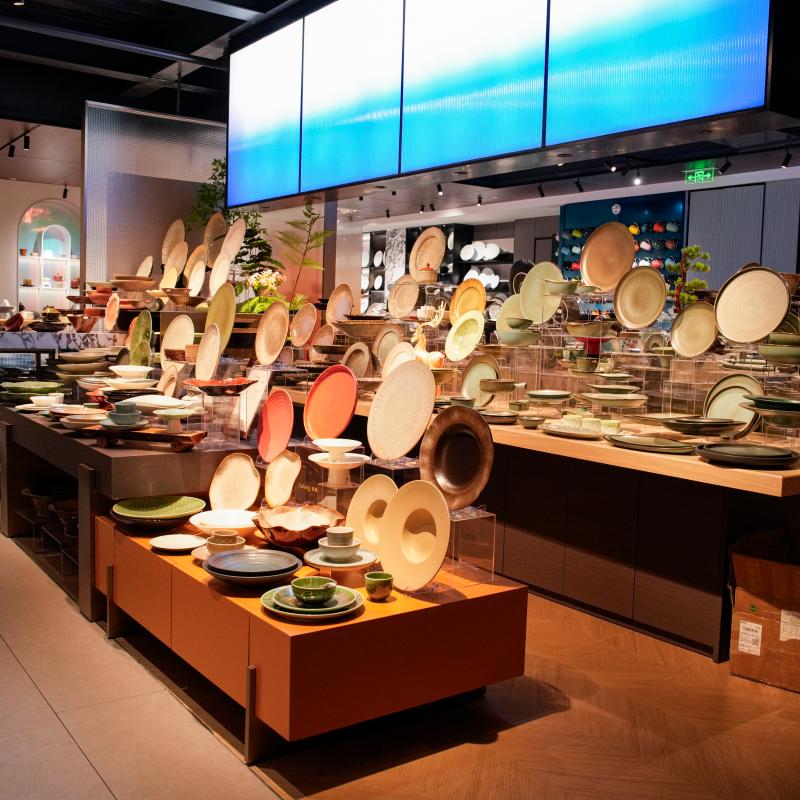
Understanding material is the first step toward reducing replacement costs and maximizing longevity. Commercial dinnerware must withstand dishwashing, rapid thermal shifts, and heavy back-of-house handling.
| Material | Physical Attributes | Commercial Durability | Heat & Thermal Tolerance | Ideal Hospitality Outlet |
| Vitrified Porcelain | High-density clay fired at 1,300°C+; non-porous finish | Very High (Superior rim chip resistance) | Excellent (Oven & salamander safe) | Full-service hotel dining, banquet halls, high-volume casual |
| Fine Bone China | Formulated with bone ash; translucent, lightweight, ultra-bright white | High (Highest strength-to-weight ratio) | Excellent (Holds food heat effectively) | Luxury 5-star hotels, fine dining, private executive lounges |
| Stoneware | Natural earthy clays fired at medium temperatures; reactive glazes | Medium-High (Thicker profile, rustic feel) | Good (Requires gradual temp transitions) | Farm-to-table, artisan bistros, boutique hotel breakfast rooms |
| Commercial Melamine | Heavy-duty molded resin; lightweight and break-resistant | Extremely High (Virtually shatterproof) | Limited (Max 70°C / 160°F; no microwave/oven) | Outdoor patios, poolside bars, high-volume buffets, kids' menus |
| Toughened Glass | Non-porous, tempered glass; smooth and stain-resistant | High (Resists thermal shock and impact) | Good (Designed for hot & cold service) | Dessert presentation, buffet displays, modern cocktail bars |
Vitrified porcelain is the global benchmark for commercial kitchens. During the high-temperature firing process, the body vitrifies into a glass-like structure with zero surface porosity. This prevents bacteria absorption, moisture retention, and cracking.
• Key Advantage: Scratch resistance, reinforced rims, and neutral canvas that lets food colors pop.
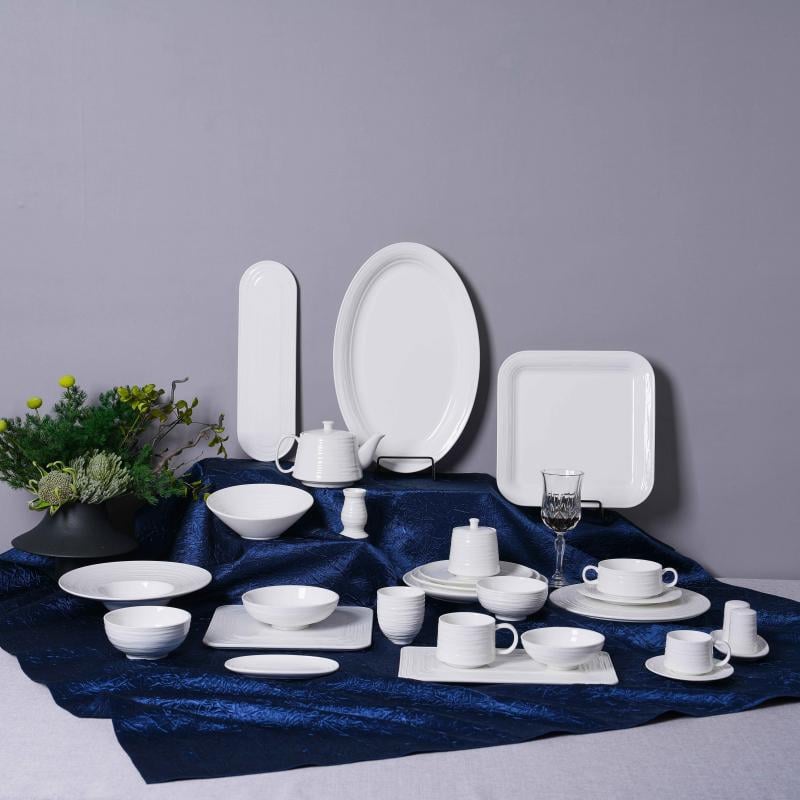
Containing up to 45% bone ash, bone china is renowned for its translucent, ivory appearance and tensile strength. Despite its delicate feel, bone china is durable and lighter than standard porcelain, reducing physical strain.
• Key Advantage: Guest perception, lightweight handling, and heat retention.
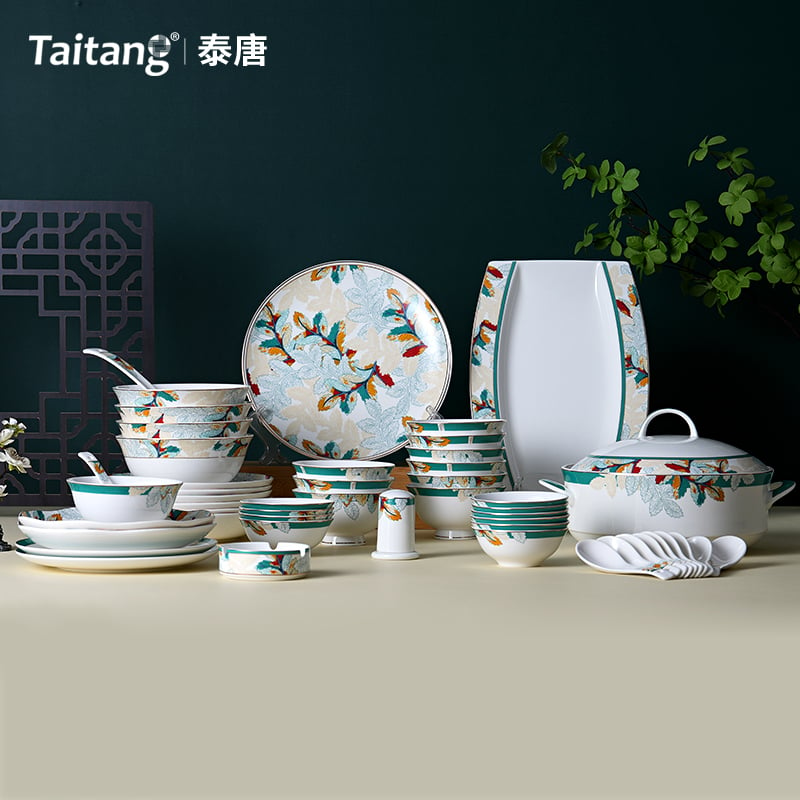
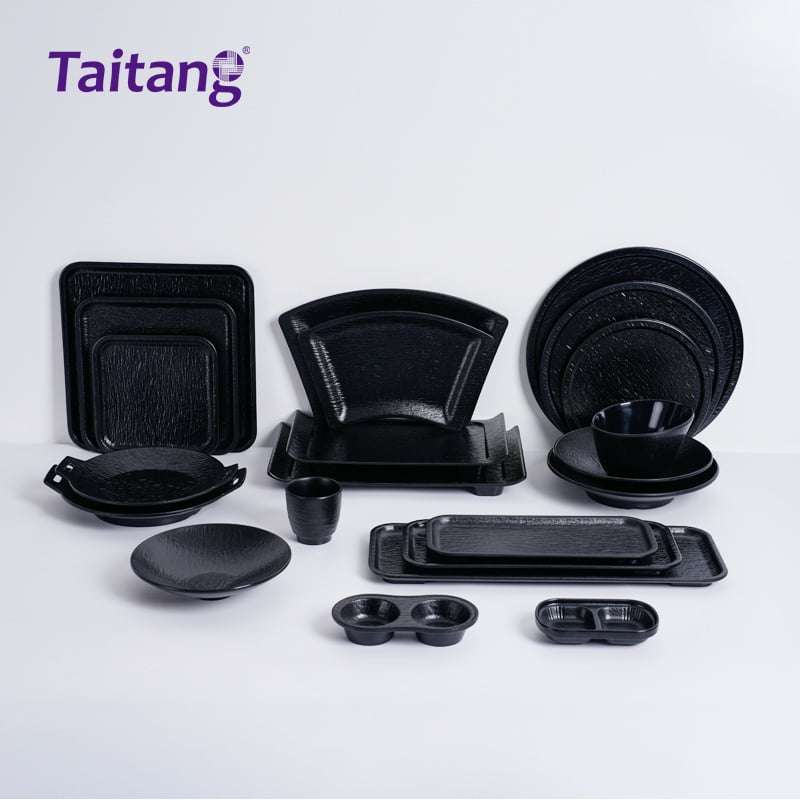
For high-traffic or outdoor zones where dropping ceramic plates presents safety hazards and financial loss, commercial melamine is the industry solution. Modern manufacturing produces melamine that mirrors matte ceramic or slate finishes.
• Key Advantage: Shatterproof, chip-proof, lightweight for rapid table resets.
2. Menu Matching Dynamics
Plate selection should serve culinary execution. A well-proportioned plate controls portion size perception, supports plating structure, and prevents accidental sauce spills during transport.
A. Plate Dimensions by Course
• Appetizers & Starters (7.5" – 9"): Compact size leaving ample room on smaller 2-seater tables.
• Main Course (10.5" – 12"): Provides sufficient white space around proteins and sides to keep plating clean.
• Pasta & Risotto Bowls (9" – 11" with wide rim or deep coupe): Concentrates heat while containing liquids and sauces.
• Dessert Plates (8" – 9"): Sized to make sweet portions appear generous without overflowing.
B. Rim Style Comparison
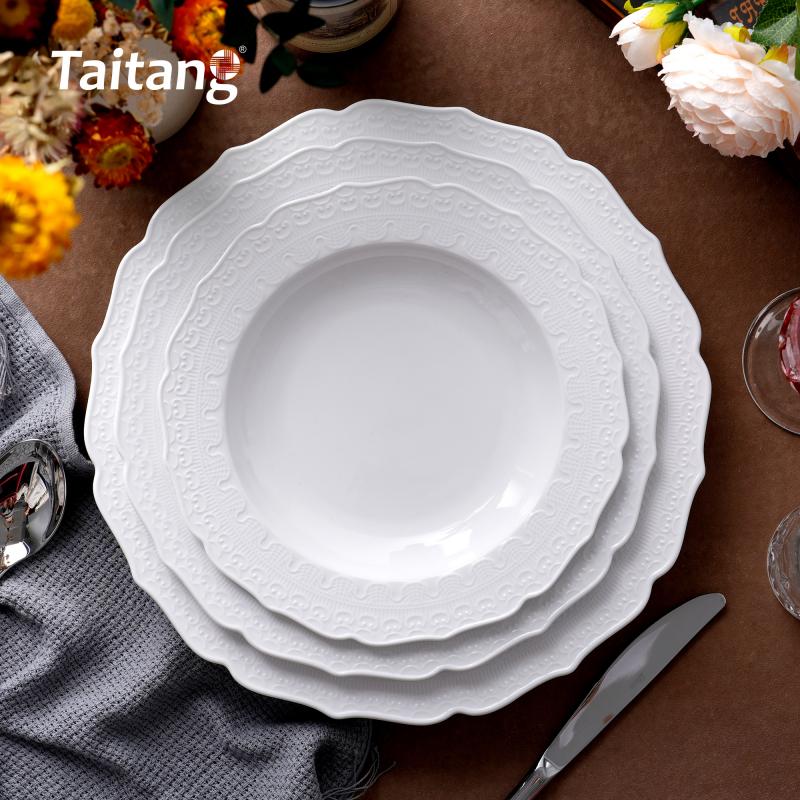
• Wide Rim: The wide border creates a picture frame around the food, directing the guest's eye to the center while giving waitstaff a safe area to grip without touching the food.
• Coupe Plates: Eliminates the raised border to offer a maximum surface area for modern plating styles. Coupe plates also stack lower in kitchen pass areas.
• Organic & Asymmetric Shapes: Oval, rectangular, and free-form artisan plates break table monotony and accentuate chef creations, sushi presentations, or shared appetizers.
C. Restaurant Style Alignment
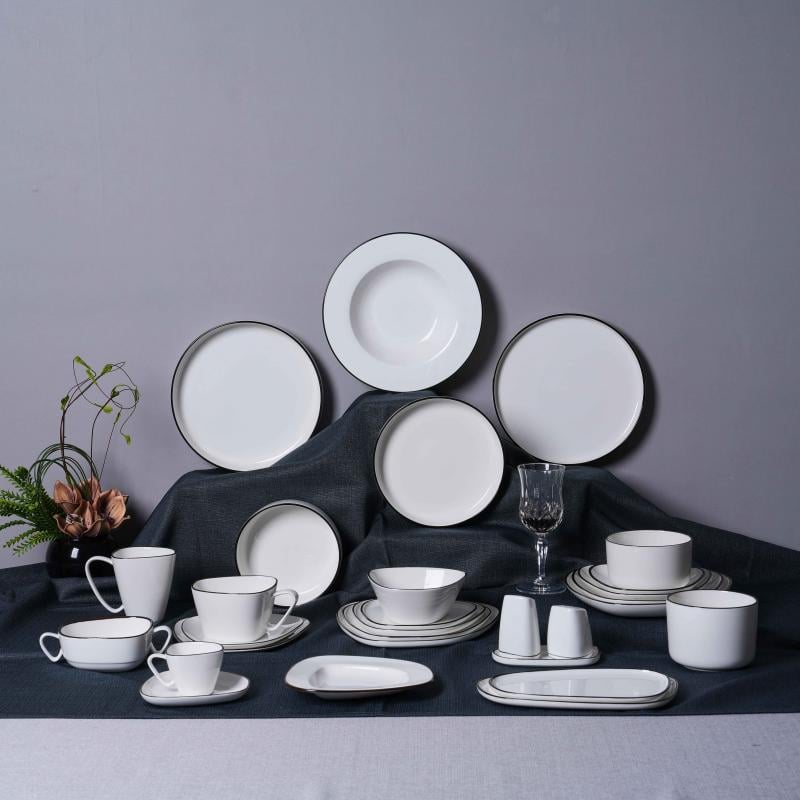
• Modern & Minimalist: Low-profile white porcelain, clean coupe edges, or matte monochrome glazes.
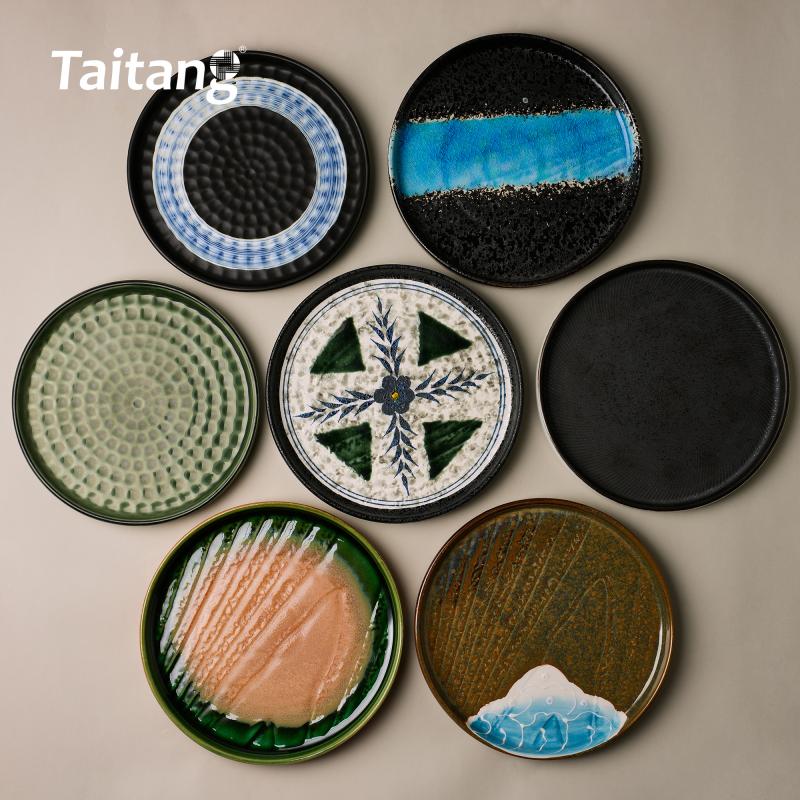
• Casual & Farm-to-Table: Earthy stoneware, hand-thrown textures, speckled reactive glazes, and warm rim accents.
• Classic Luxury & Heritage: White bone china with subtle gold/platinum rims, embossed borders, or custom logo seals.
3. Stock Planning
1) Par Level Calculation Formula
Total Stock Needed = (Total Seats × Course Turnover) + Breakage Buffer (15-20%)
Example: 100-Seat Restaurant serving 2.5 turns at dinner
• Main Dinner Plates: 100 seats × 2.5 turns = 250 plates
• Buffer (20% for dish pit cycle/loss): 50 plates
• Total Target Order: 300 Main Dinner Plates (3.0x Par Level)
2) Recommended Par Levels
| Type | Main Dinner Plates | Starter / Dessert Plates | Soup / Pasta Bowls | Coffee Cups & Saucers |
| Fine Dining | 3.0x Seating Capacity | 3.0x Seating Capacity | 2.5x Seating Capacity | 2.0x Seating Capacity |
| All-Day Hotel Dining | 3.5x Seating Capacity | 3.5x Seating Capacity | 3.0x Seating Capacity | 3.5x Seating Capacity |
| Banquet & Event Halls | 1.5x Max Event Capacity | 1.5x Max Event Capacity | 1.2x Max Event Capacity | 1.5x Max Event Capacity |
4. Quality & Safety Standards
1) Thermal Shock Tolerance: Commercial plates undergo rapid temperature swings, from cold refrigeration to hot plating lines, followed by high-temp dishwashing. Vitrified porcelain withstands thermal differentials up to 180°C (356°F) without cracking or crazing.
2) Reinforced Rolled Edges: Rims are the most vulnerable area of any plate. Look for options with reinforced rolled rims that absorb impact during dish pit sorting and bussing.
3) Dishwasher Safe: High-alkaline commercial detergents can dull low-grade glazes over time. Ensure the glaze achieves a high Mohs hardness rating to resist cutlery scratch marks and chemical clouding.
4) Food Safety Certifications: All commercial dinnerware must be certified Lead-Free and Cadmium-Free under international food contact regulations.
5) Stackability: Standardized base rings allow plates to stack vertically without wobbling, saving counter space and protecting glazes from surface friction.
6) Long-Term Guarantee: Choose suppliers offering a multi-year continuation guarantee so you can reorder identical replacement pieces as needed.
5. Why Partner with Taitang?
As a trusted global one-stop hospitality partner, Taitang combines factory-direct wholesale pricing with commercial-grade durability, crafting zero-porosity porcelain fired up to 1,320°C alongside full OEM/ODM customization for custom glazes, unique shapes, and logo branding.
Beyond dinnerware, our hotel ecosystem delivers complete flatware, glassware, and kitchen solutions engineered to elevate guest presentation while minimizing annual replacement costs.
Ready to streamline your hotel procurement?
[Get a Tailored Wholesale Quote]
Related Reading
1. How to Choose White Porcelain Dinnerware Guide

