
 EN


News
How to Choose the Right Commercial Glassware Supplier for Your Hotel and Restaurant?
Target Audience: Hotel owners, restaurant operators, bar managers, hotel supplies procurement managers, F&B directors
Topic: Glassware material comparison, commercial quality identification, venue-specific selection, stock calculation, breakage reduction, care & maintenance, 2026 procurement trends, supplier evaluation criteria
Author: Taitang
Key Takeaways
|
• Material Matters: Choosing the right glass, from cost-effective soda-lime to durable tempered glass and elegant lead-free crystal, balances guest experience with operational longevity. • Smart Allocation: Matching specific glassware styles to venue demands and using dynamic inventory ratios (2.5–3× per seat) ensures smooth service and prevents stock shortages. • Loss Control: Standardizing handling racks, preventing thermal shock, and following proper dishwashing protocols lowers monthly breakage rates. |
Why Glassware Procurement is Critical?
In the operation of high-end hotels, fine dining restaurants, and bustling bars, choosing the right commercial glassware and reliable suppliers impacts operating costs, table aesthetics, and food safety standards. This article provides an in-depth analysis of the glassware procurement process, helping you avoid common pitfalls and empowering your hospitality F&B business.
1. Material Comparison and Quality Identification
A. Soda-Lime Glass
• Features: The most common commercial glass material, offering high cost-effectiveness, ideal for high-frequency daily use in casual restaurants and banquet halls.
• Quality Identification: Soda-lime glass features high light transmittance, a surface free of bubbles and ripple marks, and rims treated with professional fire-polishing or cold-cutting.
B. Tempered Glass
• Features: Subjected to special thermal treatment (strengthening processes), its impact resistance is 3 to 5 times that of ordinary glass. Even if broken, it shatters into small obtuse-angled particles, enhancing guest dining safety.
• Application Scenarios: High-traffic bars, buffets, and outdoor terrace dining areas.
C. Lead-Free Crystal
• Features: High refractive index, crisp sound, and crystal-clear texture, perfectly showcasing the color and legs of wine.
• Application Scenarios: Luxury hotel suites, fine dining restaurants, and tasting rooms.
2. Essential Commercial Glassware Types
Different beverages require dedicated vessels to release their optimal flavors. Here are the core categories indispensable to hotels and bars:
• Wine Glasses and Champagne Flutes: Bowl shapes and rims tailored to different wine bodies.

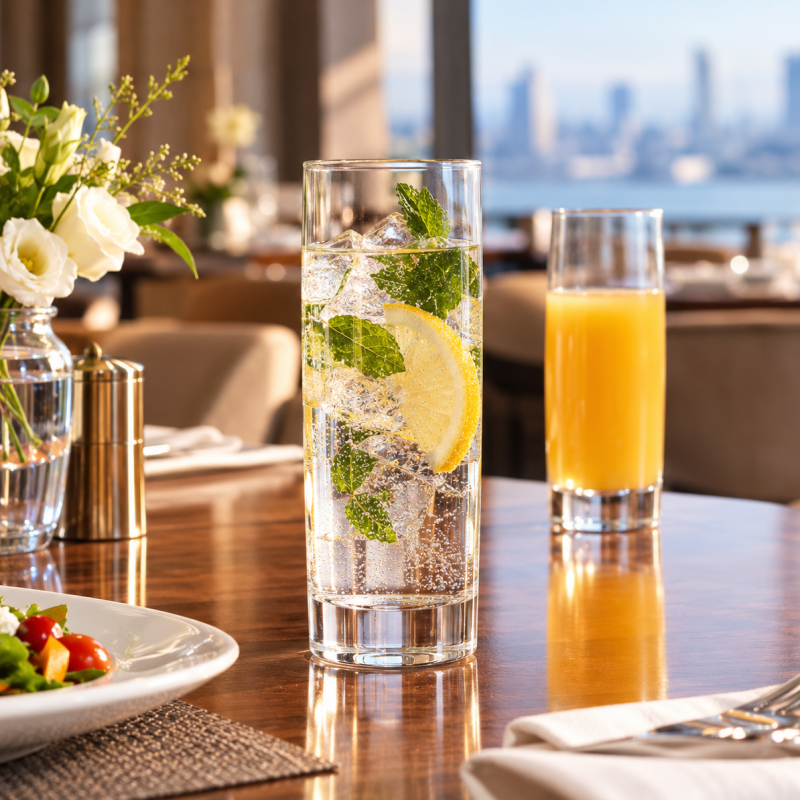
• Highball & Collins Glasses: The ideal choice for cocktails, sodas, and soft drinks.
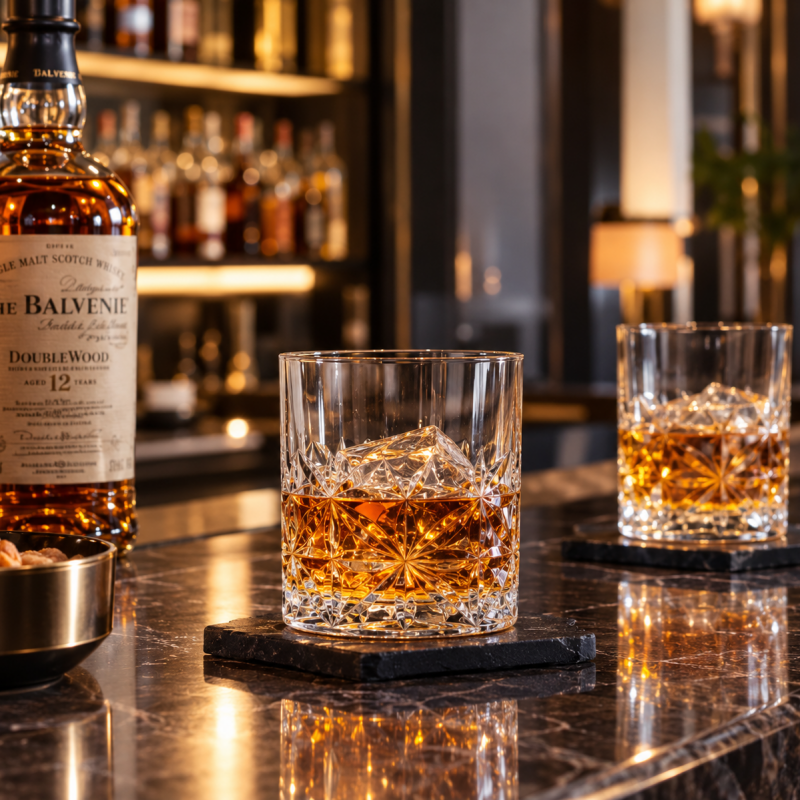
• Rocks & Shot Glasses: Heavy-bottom design, stable and durable.
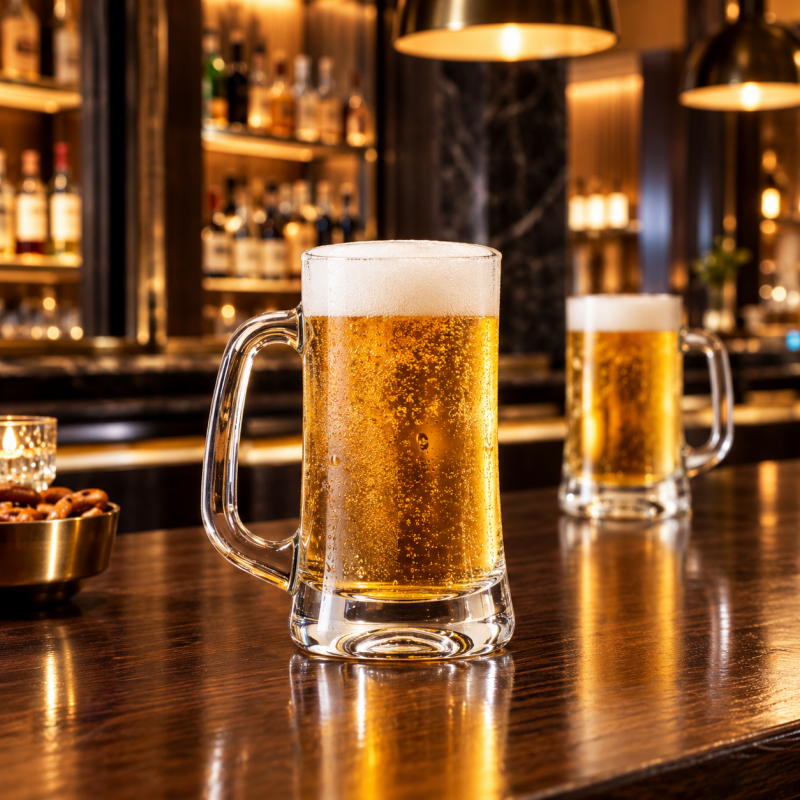
• Beer Mugs and Juice Pitchers: Meeting large-capacity demands for banquets and buffet catering.
For more comprehensive style selection details, please refer to our Hotel Glassware Procurement Guide.
3. How to Equip Glassware According to Venue Type?
Functional requirements for glassware vary across operational venues:
• All-Day Dining: Emphasizes durability and versatility, recommending dishwasher-friendly, shock-resistant tempered soda-lime glass.
• High-End Bars & Clubs: Emphasizes visual impact and grip feel, requiring professionally crafted cocktail glassware resistant to thermal and mechanical shock.
• Banquet & Conference Centers: Pursues high inventory reserves and standardized stackability for fast service and efficient storage.
4. How to Calculate Required Glassware Quantities?
A reasonable inventory baseline ensures smooth operations while avoiding capital tie-ups. It is generally recommended to calculate based on seat turnover rates and breakage reserve coefficients:
• Base Ratio: It is recommended to equip 2.5 to 3 times the total daily usage of glassware per seat (accounting for washing cycles, breakage, and peak-hour backups).
• Loss Allowance: The average monthly breakage rate in commercial environments typically ranges from 5% to 15%, while tempered glass keeps breakage rates at the lower end.
5. How to Reduce Breakage Rates?
High breakage costs are a hidden pain point in hospitality operations. The core of reducing loss lies in:
• Standardized Operation: Avoid stacking glasses too high; use professional glass racks for segregated washing.
• Thermal Control: Prevent thermal cracking caused by sudden temperature changes (sudden cooling or heating).
For daily deep cleaning, stain removal, and storage tips for commercial glassware, please check our Commercial Glassware Maintenance Guide.
6. New Trends in Hotel Glassware Procurement for 2026
Driven by sustainability and personalized aesthetics, current procurement trends exhibit the following characteristics:
• Eco-Friendly Lead-Free Materials: A growing number of hotels lean toward procuring recyclable eco-crystal and lead-free glass.
• Multi-Functional & Modular Design: Reducing variety while maximizing single-item utility.
• Superior Durability: More willing to invest in high-quality tempering processes to achieve long-term cost reduction and efficiency gains.
7. How to Evaluate a Commercial Glassware Supplier?
Premium suppliers must possess the following core capabilities:
• Quality Control System: Ensuring every batch of glassware features uniform wall thickness, freedom from bubbles, and compliance with international food-grade safety standards.
• Customization Capabilities: Ability to provide one-stop tabletop aesthetic matching and efficient global supply chain logistics for star-rated hotels of all tiers.
• Taitang Core Advantages: As a professional brand rooted in the hotel supplies industry, Taitang features stringent factory quality control, a comprehensive product line, and extensive international hotel project matching experience, offering full-lifecycle support from selection consulting and inventory planning to secure logistics.
[Contact Us For Project Consultation]
Related Reading
1. How to Select The Perfect Glassware for Restaurant and Bar?

