
 EN
EN


News
How to Select a High-ROI Hotel Scent Diffuser?
Target Audience: Hotel Owners, General Managers, Hospitality Procurement Directors, Purchasing Managers, Facility Directors
Topic: B2B Scent Marketing, Commercial Scent Diffuser Procurement
Author: Taitang
Key Takeaways
|
• Quantifiable ROI: Professional scent marketing enhances guest satisfaction scores by up to 20%, increases brand recognition by 30%, and drives higher secondary spending in hotel bars, spas, and lobbies. • Cold-Air Atomization Standard: Waterless and heatless nano-atomization (nebulization) is the industry standard for hotels, leaving zero oily residue and preserving essential oil purity. • Strategic Sizing & HVAC: Select equipment based on cubic meter (m³) coverage, utilize central HVAC integration for grand lobbies and wall-mounted systems for corridors and suites. • Health & Compliance: Demand IFRA-certified, hypoallergenic, and VOC-compliant essential oils to protect guest safety and indoor air quality. • Preventative Maintenance: Performing a monthly 95% industrial alcohol flush prevents atomization core clogging and doubles machine lifespan. |
1. The Science of Hotel Scent Marketing
Olfactory marketing, the strategic deployment of ambient scenting, acts on the human brain’s limbic system, the center for emotions and memory.
Because smell bypasses cognitive filtering, a hotel’s ambient fragrance creates an immediate, visceral warm welcome effect within the first 5 seconds of entering the lobby, setting a high benchmark for the entire guest stay.
Proven Industry Data & ROI Metrics
1) Elevated Guest Satisfaction: Research published in the Journal of Marketing and industry surveys from Hotel Business show that introducing a pleasant aroma increases overall guest satisfaction ratings by up to 20%. Over 91% of hotel guests report that ambient scent positively influences their perception of service quality, comfort, and cleanliness.
2) Enhanced Brand Recall & Loyalty: According to research highlighted by the Branded Agency, a distinct sensory boosts brand recognition by 30%. Repeat travelers associate familiar hotel fragrances with feelings of safety and luxury, creating lasting brand recall.
3) Increased Secondary Revenue: Creating an inviting sensory environment encourages guests to linger longer in lobbies, executive lounges, bars, and retail spaces. This extended dwell time elevates secondary spend across hotel.
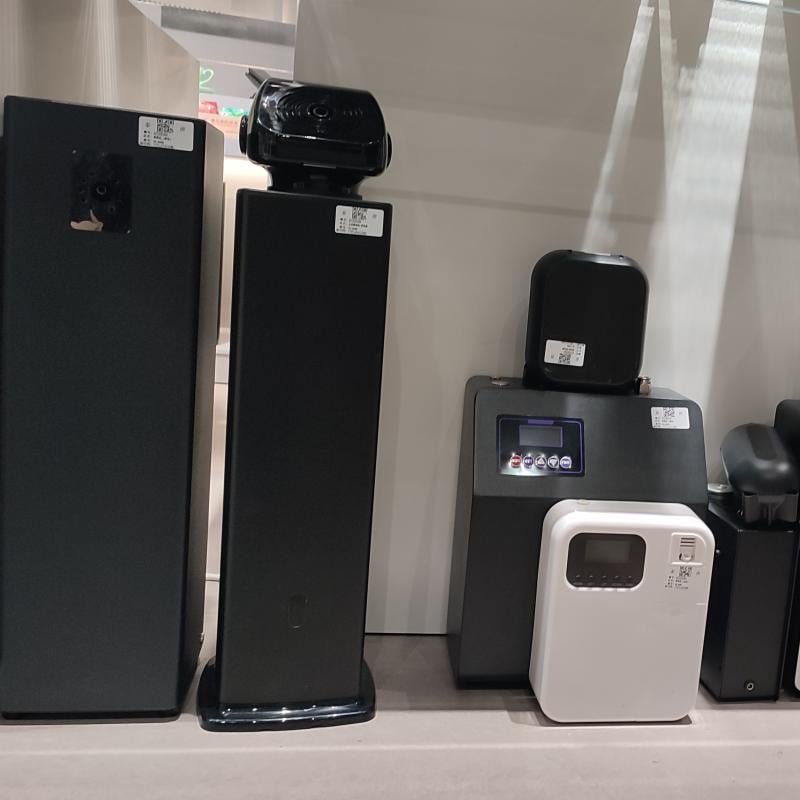
2. Features of Commercial Scent Machines
A high-grade hotel scent machine must operate continuously across large, high-airflow environments while delivering uniform fragrance intensity.
A. Cold-Air Nano-Atomization Technology
The gold standard for hotel scenting is waterless, heatless cold-air diffusion. Using pressurized fluid mechanics, cold-air nebulizers break pure fragrance oils into micro-fine dry mist particles (0.5 to 3 microns in diameter).
• Zero Residue: Because the particles are microscopic, they remain suspended in circulating air currents for hours without dropping onto luxury marble floors, carpets, or fine furniture as oily film.
• Preserved Fragrance Integrity: Heat alters top notes and breaks down volatile organic aromatic compounds. Cold-air technology preserves the full, multi-layered scent profile from top to base notes.
B. Central HVAC Duct Integration
For grand hotel lobbies, convention halls, and expansive multi-story atriums, standalone units may leave fragrance gaps. Commercial systems engineered with HVAC connection ports pump atomized scent into the air conditioning ductwork. This distributes scent evenly across thousands of cubic meters without cluttering public decor.
C. Microcomputer Adjustment
Operational cost control relies on oil consumption management. Professional hotel scent diffusers feature intelligent microcomputer panels enabling facility managers to program:
• Multiple daily work periods (e.g., peak morning check-out and evening arrival times).
• Granular mist concentration cycles (e.g., 30 seconds diffusion / 120 seconds pause).
• Day-of-week scheduling to conserve oil during low-occupancy windows.
D. Silent Operation & Security Locks
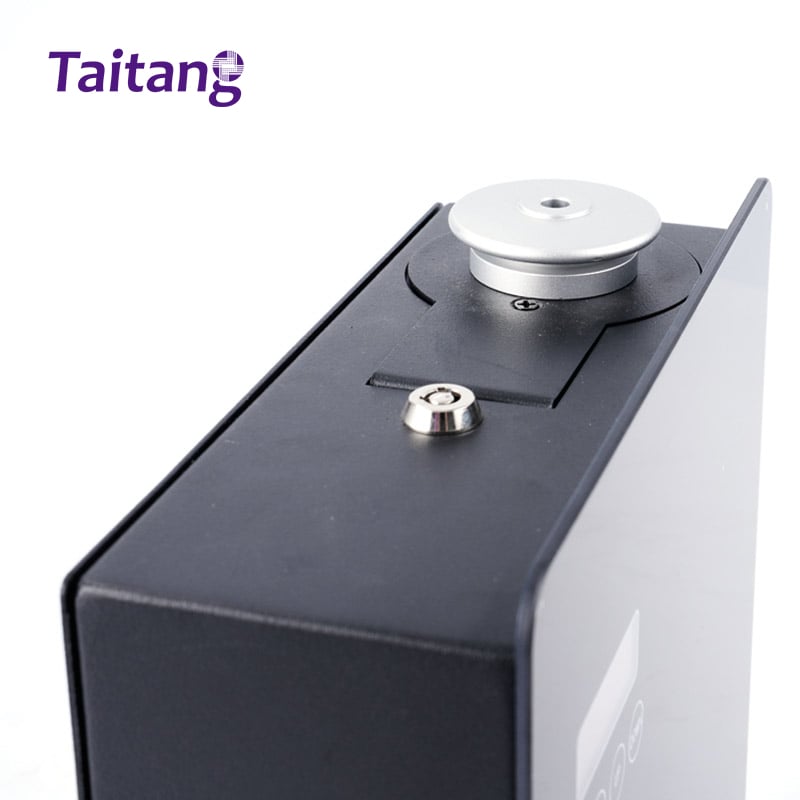
Guest comfort requires silent operation (<35–40 dB) so motor noise never interrupts quiet corridors or luxury suites. Furthermore, B2B units must feature physical key-lock security systems to prevent unauthorized tampering.
3. Key Procurement Considerations
A. Coverage Space Calculation
Always calculate space volume in cubic meters (m³) rather than square footage alone, as hotel lobby ceiling heights vary significantly (e.g., a 500 ㎡ lobby with a 6-meter ceiling requires 3,000m³ coverage capacity).
B. Fragrance Oil Quality
Hotel guests include children, elderly individuals, and guests with respiratory sensitivities. Procurement teams must require suppliers to provide:
• IFRA Compliance: Ensuring oils are free from dangerous toxins, heavy metals, or prohibited phthalates.
• Hypoallergenic & Non-Toxic Formulations: VOC-compliant, pet-friendly, and safe for continuous breathing environments.
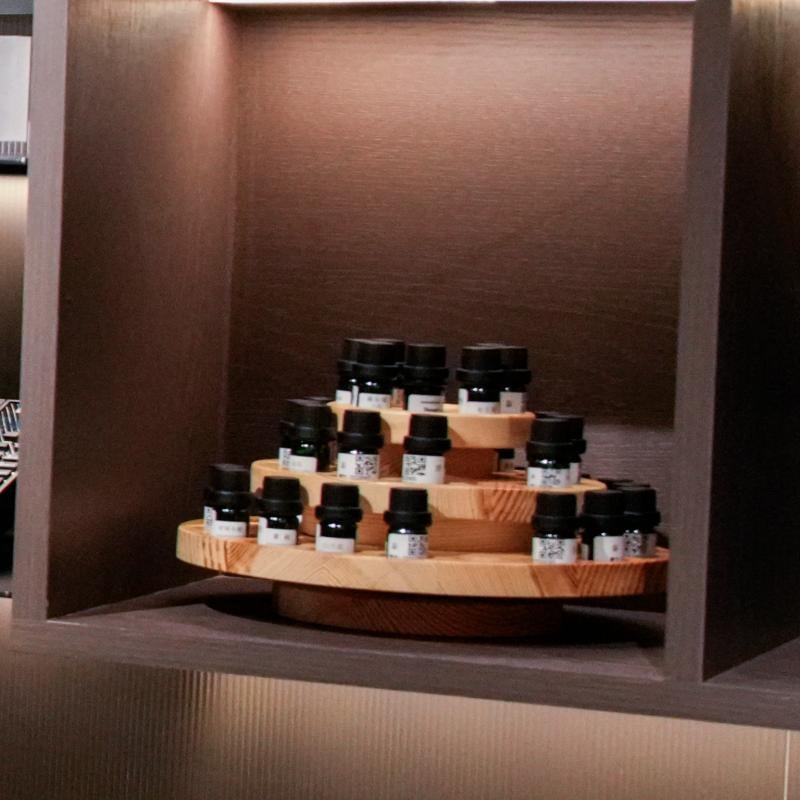
• Scent Formulation: Ability to customize olfactory signatures (e.g., calming white tea & white cedar, refreshing citrus bergamot, or elegant sandalwood).
C. Mounting & Air Circulation
• HVAC Connection: Best for wide-open spaces with central air handling units.
• Wall-Mount Placement: Position wall units 1.8 to 2.5 meters above ground near air supply vents or entrance corridors where natural air velocity distributes the scent evenly. Avoid placing units near exhaust fans or open doors where air is pulled outward.
4. Safety, Operation & Maintenance
A. Standard Operating Procedures
• Drain: Remove oil canister once oil level is low.
• Fill: Add 30–50ml of 95%+ Industrial/Rubbing Alcohol into a clean bottle.
• Flush: Run the scent machine on maximum intensity for 10–15 minutes.
• Dissolve: Alcohol dissolves crystallized botanical oil residues in nozzle.
• Refill: Wipe nozzle, replace with fresh essential oil canister, & reset timer.
B. Safety Protocols
• Refill Windows: Set automated reminders to inspect oil reservoir levels every 30 to 45 days based on programmed daily consumption.
• Ventilation Calibration: Calibrate scent density so the aroma remains a subtle background ambiance. Scent should never feel overpowering or cause eye/nasal irritation.
• No Water Addition: Never add water into cold-air diffusion units. Water damages nebulization cores and creates bacterial growth risks.
5. Commercial Scent Diffusers
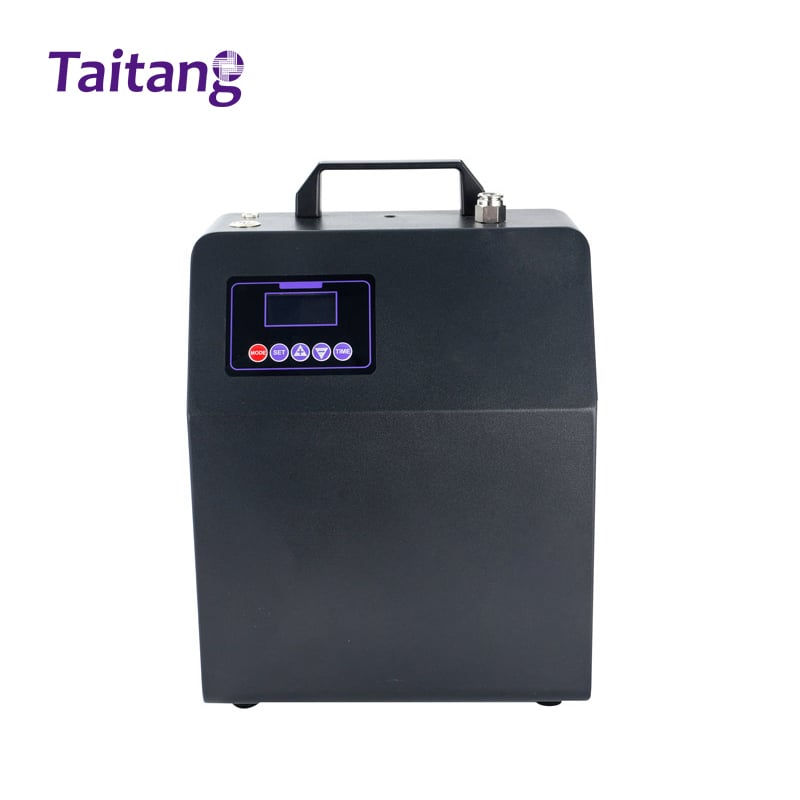
1) Essential Oil Aromatherapy System: Industrial nano-atomization core, digital touchscreen control, and ultra-quiet motor.
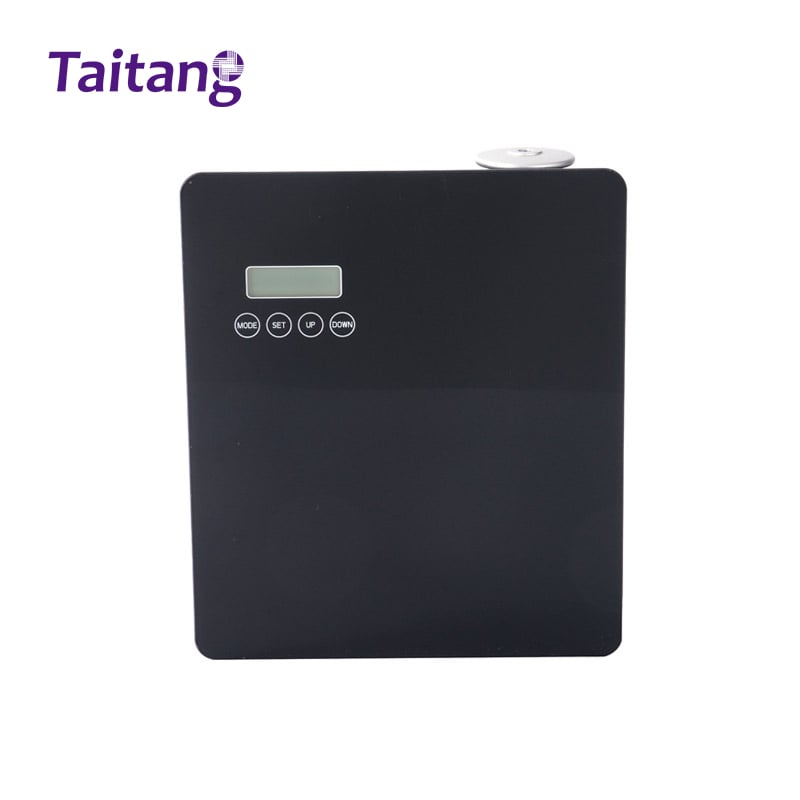
2) Wall-Mounted Aromatherapy System: Ultra-slim space-saving design, key-lock anti-tamper structure, wall mounting, whisper-quiet operation.
6. Taitang B2B Solutions
Choosing Taitang means partnering with an one-stop hotel supply manufacturer. Serving over 2,000 international hotel engineering projects across luxury resorts, business hotels, and commercial venues, Taitang provides end-to-end procurement support.
[Contact Our Specialists Today]
Related Reading
1. What to look for in hotel room safes?
2. How to choose the best hotel ironing kits?
3. Are you choosing the right guest room refrigerator?
4. Why In-Room Coffee Machine Elevate Guest Experience?

