
 EN


News
How to Choose the Right Hotel Slippers for Your Guests?
Target Audience: Hotel owners, boutique resort operators, resort managers, and hotel amenity procurement professionals
Topic: Comprehensive B2B Hotel Slippers Sourcing & Buying Guide
Author: Taitang
Key Takeaways
|
• Why indoor slippers are a critical touchpoint for guest satisfaction and brand reputation. • Deep dive into upper materials (terry, coral fleece, waffle, cotton-linen, velvet, non-woven) and their ideal room tiers. • Sole material comparisons (EVA, TPR, natural cork, anti-slip dot-plastic) focusing on safety and durability. • Style classifications: Disposable vs. Washable, Open-toe vs. Closed-toe. • Custom branding mastery (embroidery vs. printing, sizing, packaging). |
When a guest steps into a hotel room after a long journey, one of the first things they look for is a pair of comfortable slippers, which serve as an ambassador of your property's quality, cleanliness, and attention to detail.
For B2B hotel owners, choosing the right slippers is about elevating guest perception, reinforcing brand identity, and ensuring slip-resistance on hotel floors. In this comprehensive guide, Taitang breaks down everything you need to know to source the perfect hotel slippers that balance luxury, safety, and ROI.
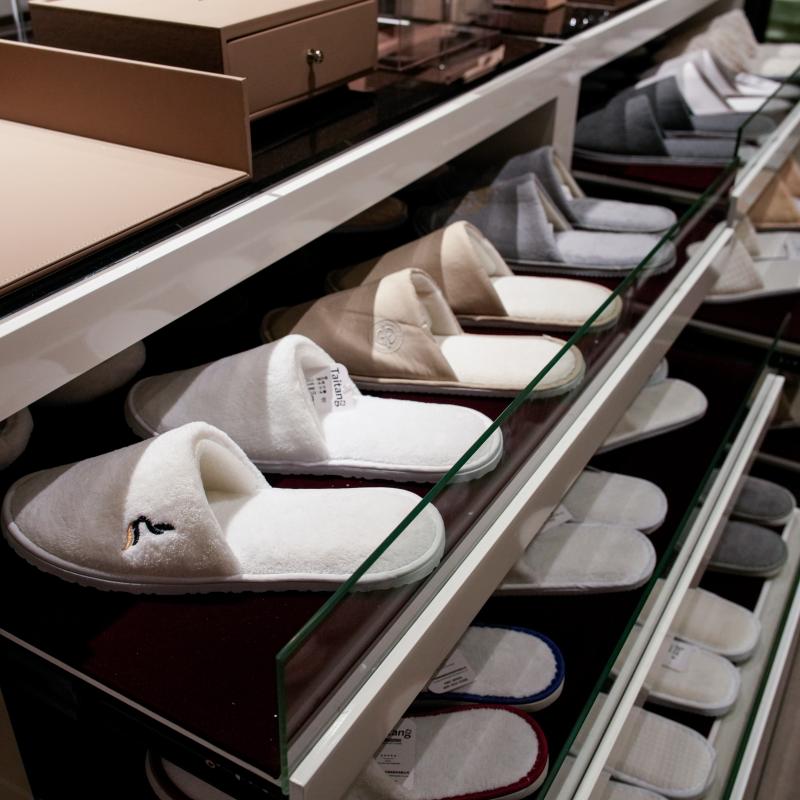
1. Why Every Hotel Needs Indoor Slippers?
• Hygiene & Confidence: Providing fresh slippers reassures guests that floors are clean, protecting them from cold or dusty tiles.
• Perceived Value: A plush, branded slipper bridges the gap between high-end bath linens and overall room comfort.
• 5-Star Standard: In luxury suites and resorts, bare feet on hard flooring are discouraged; slippers complete the relaxation uniform alongside bathrobes.
2. Common Upper Materials & Application Scenarios
Choosing the right upper material depends on your property's star rating, regional climate, and guest demographic.
| Category | Sub-types Included | Best Suited For | Key Characteristics |
| Plush & Warm | Coral Fleece, Velvet, Velour, Polar Fleece | Luxury suites, winter resorts, high-end VIP rooms | Rich, cozy feel, excellent warmth, luxurious tactile experience. |
| Absorbent & Classic | Terry Cloth, Fine Cotton | Standard 4–5 star rooms, spas, resort bathrooms | Soft, highly absorbent, familiar spa-like comfort. |
| Breathable & Structured | Waffle Weave | Business hotels, urban boutique hotels, serviced apartments | Clean, professional look, quick-drying, lightweight. |
| Eco-Chic & Natural | Cotton-Linen Blends, Herringbone, Fine Linen, Imitation Linen/Cotton | Eco-resorts, island properties, wellness retreats, bohemian villas | Rustic-chic aesthetics, highly breathable, sustainable appeal. |
| Economical & Light | Non-Woven Fabric, Imitation Fabric, Slub Knit | Short-stay transit hotels, budget motels, airline amenity kits | Lightweight, cost-effective, ideal for high-volume disposable use. |
3. Sole Materials & Safety Performance
A slipper is a liability if it causes a slip-and-fall accident on marble or tiled hotel floors. Outsole construction is paramount.
• EVA & EPE Soles: Lightweight, flexible, and cost-effective. Widely used for standard disposable and mid-scale hotel slippers.
• Rubber & TPR (Thermoplastic Rubber): Heavier, highly durable, waterproof, and superior in traction. The gold standard for washable, reusable luxury slippers.
• Natural Cork Soles: Blended with EVA bases to offer an eco-luxury, earthy foundation that is lightweight and resilient.
• Anti-Slip Traction Patterns: Look for Dot-Plastic, Willow Pattern, or Water Ripple outsoles to guarantee maximum friction on wet bathroom tiles and spa corridors.
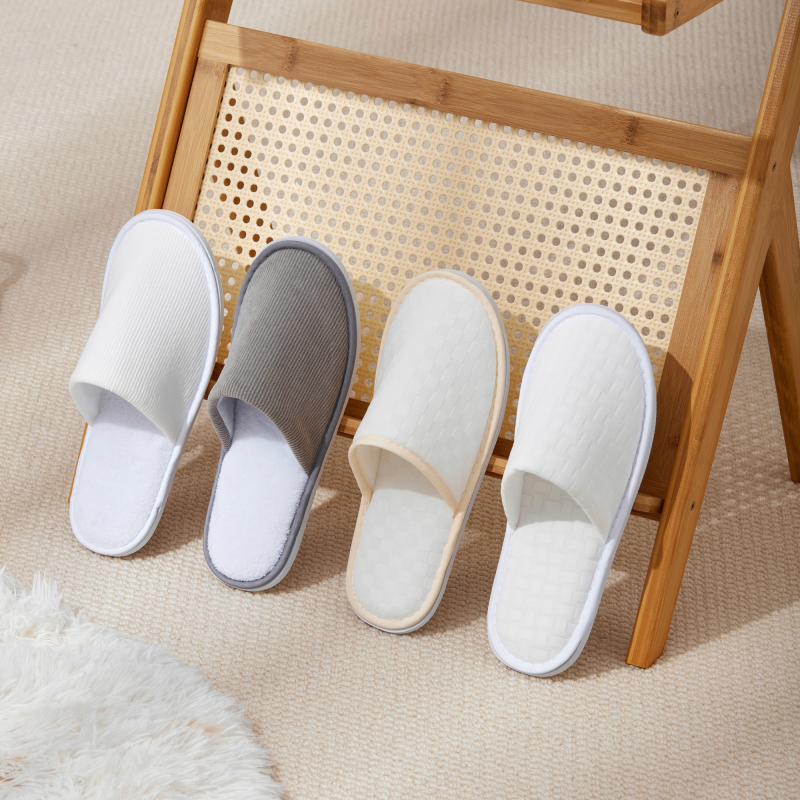
4. Style Classifications
A. Disposable vs. Washable Reusable Slippers
• Disposable Slippers: Typically cost $0.30–$1.50 per pair. Designed for single-guest turnover, minimizing laundry costs and guaranteeing absolute hygiene.
• Washable Reusable Slippers: Cost $5.00–$15.00 per pair but withstand 50–200+ commercial wash cycles, dropping cost-per-use down to $0.03–$0.15. Ideal for luxury eco-resorts and European/North American boutique hotels (where local health regulations permit reuse).
B. Open-Toe vs. Closed-Toe
• Open-Toe: Dominant in tropical resorts, summer destinations, and Asian properties for maximum breathability.
• Closed-Toe: Offers greater warmth and a formal, structured look, preferred in colder climates and luxury suites.
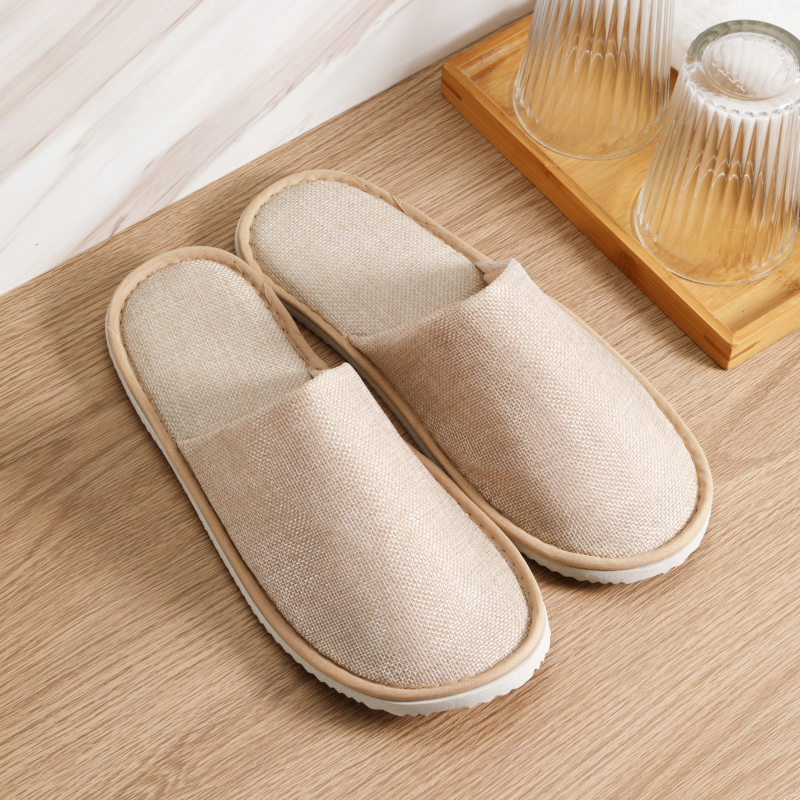
5. Customization & Supplier Sourcing
• Branding Methods: Use Embroidery or Woven Labels for textile slippers to project high-end elegance. Reserve screen printing for disposable EVA foam slippers. Keep logos clean and avoid complex gradients.
• Sizing Standards: Offer dual unisex sizing (Standard/One Size for EU 39–42; Large/X-Large for EU 43–46) to accommodate international guests, alongside custom children's sizes if family travel is prominent.
• Eco-Friendly Packaging: Opt for biodegradable PLA bags, recyclable paper bands, or kraft boxes to align with modern sustainability trends.
6. Featured Product
At Taitang, we engineer hotel slippers tailored to every property tier. Explore our top-rated wholesale selections.
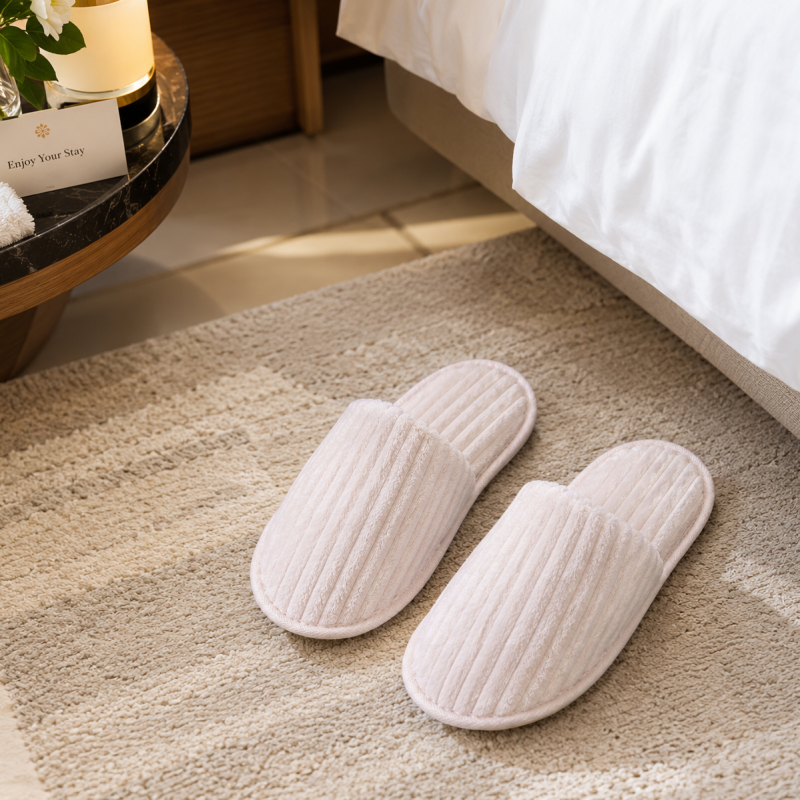
• Luxury Coral Fleece Hotel Slippers: Designed for 5-star comfort with ultra-soft plush pile and superior warmth, making them the pick for luxury suites and high-end VIP rooms.
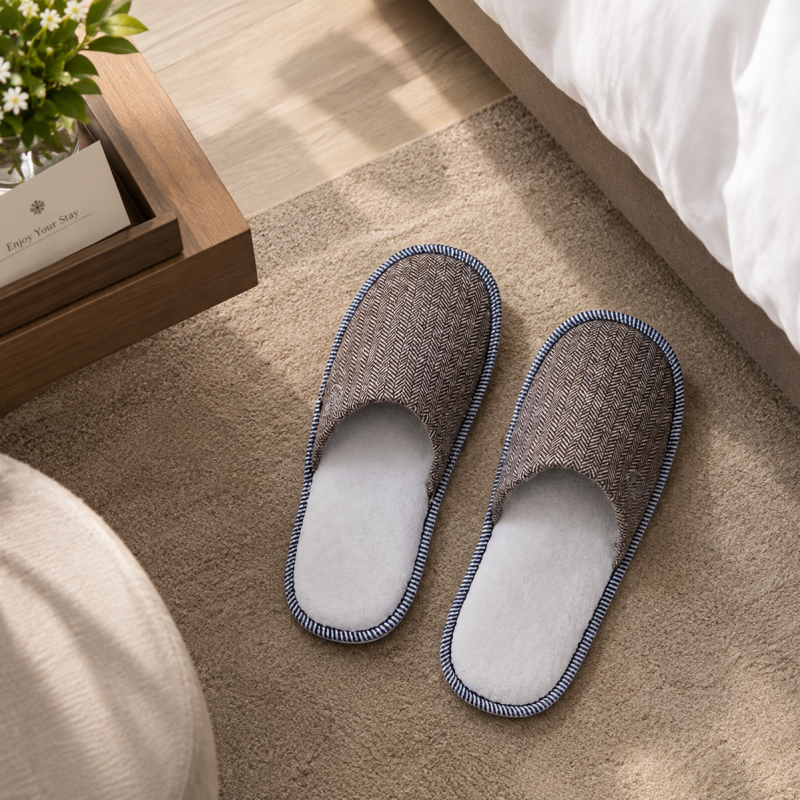
• Wholesale Hotel Slippers (Linen, Tweed & Waffle): Ideal for rustic-chic resorts, boutique retreats, and modern business hotels seeking breathable, textured sophistication.
• Disposable Polyester Hotel Slippers: The reliable, cost-effective volume choice featuring enhanced 6mm non-slip cushioning for standard guest rooms and high-turnover hotels.

Selecting the right hotel slippers elevates your guest journey while protecting your operational bottom line. With decades of manufacturing expertise, strict quality control, and bespoke custom branding solutions, Taitang is your trusted global partner for premium hotel amenities.
[Contact Us For Custom Quote!]
Related Reading
1. Hotel Towel Buying Guide GSM Quality Standards
2. How to Choose the Best Luxury Hotel Bathrobes for Your Guests?

